
- Kemerovo State University
Overview, Fees, Life in institution & the place, Syllabus, Course Details & Student Experiences
About Kemerovo State University
Academic Overview: Kemerovo State University is a premier public research university and a significant scientific hub in Western Siberia. It is officially recognized by the Ministry of Science and Higher Education of the Russian Federation and is accredited by global bodies including WHO, NMC (India), and FAIMER. The university is known for its rigorous academic standards and its integration of scientific research with clinical practice.
Key Information:
Established: 1973 (as a University); roots date back to 1953.
University Type: Public/Government.
Medium of Instruction: English (for the International Medical Program).
Recognition: NMC, WHO, WDOMS, and ECFMG.
History & Background: KemSU was founded in 1973 in the industrial heart of Russia—the Kuzbass region. Over the decades, it has expanded from a regional pedagogical institute into a massive multidisciplinary university. Its medical faculty (often referred to in coordination with the regional medical ecosystem as Kemerovo State Medical University/Institute) has over 65 years of experience in training healthcare professionals.
Current Statistics & Numbers:
Total Students: Approximately 21,000 (including part-time and branches).
International Students: Over 1,000 students from 20+ countries, with a significant Indian community of 500+ students.
Faculties: 20 Departments and 70 Academic Chairs.
Faculty Staff: 900+ lecturers, including 35 Academicians and 80 Doctors of Science.
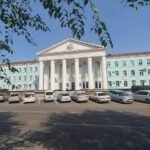
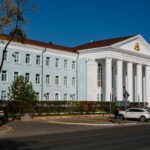
Campus Gallery




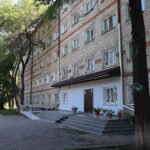
Hostel Gallery








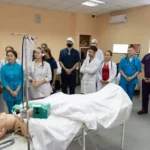
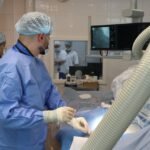
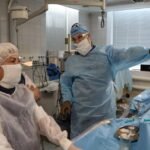
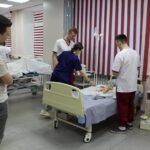
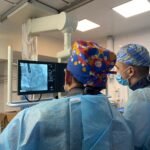
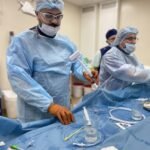
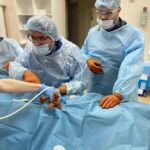
Hospital Gallery

Fee Structure of Kemerovo State University
Life in Kemerovo Oblast : An Indian MBBS Student’s Perspective
Culture:
Language: While the course is in English, students learn Russian from the first year. This is essential for clinical rotations starting in the 3rd year to interact with local patients.
Religion & Hospitality: The region is predominantly Orthodox Christian, but it is highly multicultural. Locals are known for “Siberian hospitality”—they are generally reserved but very helpful and respectful towards Indian students.
Arts & Education: Kemerovo is a cultural center with theaters, museums, and a strong emphasis on student-led arts festivals.
Food:
Traditional Cuisine: Students can try local staples like Pelmeni (dumplings) and Blini (pancakes).
International Options: The city has various cafes serving Italian and Central Asian cuisines.
Indian Food: Most importantly for Indian students, the university hostels often feature Indian Mess facilities or shared kitchens where students cook together. Indian spices and rice are available in local supermarkets like Lenta or Magnit.
Lifestyle and Relevant Information:
Climate: Kemerovo has a continental climate. Winters are cold (averaging -15°C), while summers are pleasant (20°C to 25°C). Buildings and hostels are centrally heated.
Transportation: The city has an efficient network of trams, buses, and taxis (Yandex Go is widely used).
Cost of Living: Very affordable compared to Moscow or Saint Petersburg. Monthly expenses (excluding rent) typically range from $150 to $250.
Safety: The campus and hostels have 24/7 CCTV surveillance and security guards. Kemerovo is considered a safe, student-friendly city.
Why Study MBBS at Kemerovo State University ?
Based on student reviews, news reports, and consultant data:
Direct Admission: No donation or capitation fees; admission is based on NEET qualification and 12th-grade marks (PCB 50%).
Affordability: Total tuition fees are significantly lower than private medical colleges in India (approx. 2,95,000 RUB per year).
Clinical Exposure: From the 3rd year, students practice in affiliated government hospitals, gaining hands-on experience with a diverse range of medical cases.
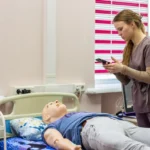
Modern Infrastructure: Students highlight the well-equipped “Simulation Centers” and digital libraries as major perks.
Global Degree: Graduates are eligible to sit for NExT (India), USMLE (USA), and PLAB (UK).
Course Duration at Kemerovo State University
The total duration of the MBBS (General Medicine) program is 6 years.
5 Years: Focused on theoretical and clinical studies.
1 Year: Compulsory Internship/Clinical Rotation (integrated into the 6-year program as per NMC guidelines).
Life in Russia from the students' perspective
Safety: Students frequently mention feeling safe even late at night. The Russian government provides high security for international hostels.
Indian Community: Large celebrations for Diwali, Holi, and Eid are organized by the university, creating a “home away from home” atmosphere.
Nature & Tourism: Students enjoy exploring the Siberian wilderness, the Tom River, and occasional trips to the Altai Mountains during vacations.
Local Impression: Indians are well-regarded in Russia, often associated with a long history of political friendship and a love for Bollywood films and tea.
Eligibility Criteria for MBBS in Russia
Indian students applying for MBBS admissions in Russia must fulfil the following eligibility criteria:
- Minimum 50% score in Physics, Chemistry, and Biology in Class 12 and passing marks in English.
- Attained the age of 17 as of 31st December in the admission year.
- Cleared NEET exam (in order to practice medicine in India) (50th percentile for general/EWS category and 40th percentile for SC/ST/OBC category)
Benefits of MBBS in Russia
Verifiable Quality: Russia ranks among the top 30 in the world for medical education according to WHO/UNESCO.
NMC Compliance: The curriculum is designed to meet the NMC’s FMGL (Foreign Medical Graduate Licentiate) Regulations 2021, ensuring the degree is valid in India.
Subsidized Education: Most universities are government-funded, meaning the Russian government subsidizes the education of international students.
MBBS Syllabus in Kemerovo State University
| Phase | Years | Key Subjects Covered |
| Pre-Clinical | 1 – 2 | Anatomy, Histology, Biochemistry, Physiology, Latin Language, Russian Language. |
| Para-Clinical | 3 | Pathology, Microbiology, Pharmacology, Pathophysiology, Genetics. |
| Clinical | 4 – 6 | Internal Medicine, Surgery, Pediatrics, OB-GYN, Oncology, Neurology, Emergency Medicine, Psychiatry. |
FAQ
MBBS abroad is a better options then private medical in India, especially in terms of cost, private medical in India costs a fortune more then that of many countries abroad.
Comparing FMG exam with NEET, we can safely say it is not at all a tough exam. Although there are no specific matrix to judge how tough an exam is, but considering the passing ratio of FMG exam which is roughly 20-25% to that of the percentage of candidates who get selected for government medical college through NEET which is roughly 0.02%, FMG exam is definitely a tough exam in the field of medical studies.