
- Kyrgyz State Medical Academy
Overview, Fees, Life in institution & the place, Syllabus, Course Details & Student Experiences
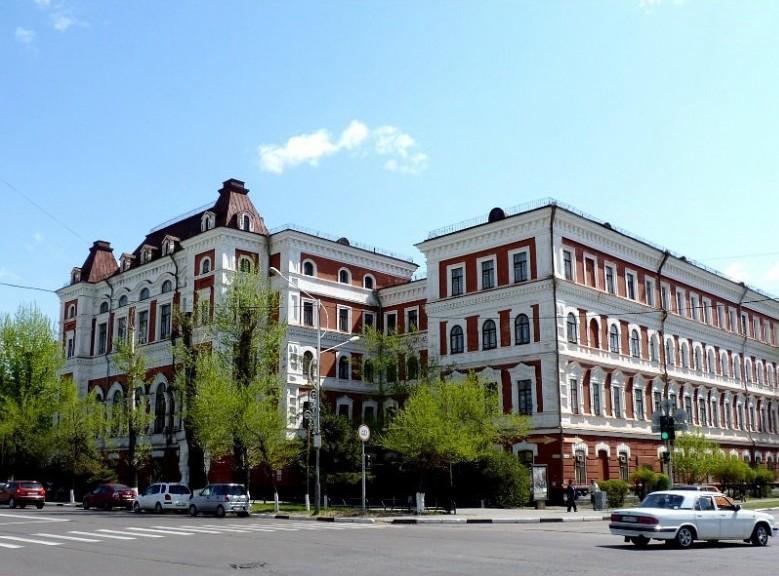
About Kyrgyz State Medical Academy
The I.K. Akhunbaev Kyrgyz State Medical Academy (KSMA) is the oldest and most prestigious government medical institution in Kyrgyzstan. Established in 1939, it serves as the cornerstone of medical education and healthcare research in the Republic.
Academic Overview
KSMA is a top-tier government university recognized globally for its rigorous academic standards. It is officially approved by:
National Medical Commission (NMC), India
World Health Organization (WHO)
FAIMER & ECFMG (USA)
Ministry of Education and Science, Kyrgyz Republic
The academy utilizes a modern, English-medium curriculum designed to help international students excel in global licensing exams like NExT (India) and USMLE (USA).
History & Background
Founded during the Soviet era in the city of Frunze (now Bishkek), the academy was established with the help of elite medical institutes from Moscow and Saint Petersburg. Over 80 years, it has transformed from a small provincial institute into a massive scientific hub, producing over 30,000 doctors who practice worldwide today.
Current Statistics & Numbers (2025–2026)
Total Students: 15,000+
International Students: 3,000+ (from over 23 countries)
Indian Students: 1,000+ currently enrolled.
Faculty Members: 600+ professors and lecturers, including 90+ Doctors of Medical Science.
Affiliated Hospitals: Use of all major state hospitals in Bishkek for clinical rotations.
Campus Gallery
Hostel Gallery
Hospital Gallery
Fee Structure of Kyrgyz State Medical Academy
Life in Bishkek: An Indian MBBS Student’s Perspective
As the capital city, Bishkek offers a blend of Soviet-era architecture and modern European lifestyle, making it an exciting yet comfortable place for Indian students.
Culture
Language & Religion: Kyrgyz and Russian are the primary languages, but most youth and academy staff speak English. The city is culturally diverse and religiously tolerant.
Hospitality: Local people are known for being polite and helpful, often showing a keen interest in Indian culture due to the popularity of Bollywood.
Arts & Education: Bishkek is the cultural heart of the country, featuring the State Opera, Ballet Theatre, and numerous museums.
Food
Indian Mess: KSMA provides dedicated Indian mess facilities in the hostels, serving familiar comfort food like Rotis, Dal, and Sabzi.
Street Food & International Options: Students enjoy local Samsa (similar to Samosa) and Manty. For a change, there are numerous international outlets like KFC and Italian pizzerias in the city center.
Lifestyle and Other Relevant Information
Climate: Temperate with four distinct seasons. Winters are snowy and cold (averaging -5°C), while summers are warm and pleasant (25°C to 30°C).
Transportation: The “Marshrutka” (mini-bus) system and taxi apps like Yandex are extremely cheap and efficient.
Cost of Living: Very low. A student can live comfortably on $100–$150 (₹8,000–₹12,000) per month.
Safety: The academy provides 24/7 security in hostels. While 2024 saw some isolated civil unrest, the government and Indian Embassy have since implemented enhanced security protocols specifically for international student zones.
Why Study MBBS at Kyrgyz State Medical Academy?
Government Credibility: Unlike many private institutes, KSMA is a state university, ensuring stable management and high clinical standards.
High FMGE/NExT Success: Graduates consistently record some of the highest passing percentages in the Indian FMGE exam due to the academy’s focus on the Indian syllabus.
Hospital Exposure: Being in the capital, students have access to the country’s largest specialized hospitals for hands-on practice.
Affordable Quality: It offers “big city” education at a fraction of the cost of private medical colleges in India or the West.
Course Duration at Kyrgyz State Medical Academy
The MBBS program (officially titled MD) at KSMA is structured as follows:
Total Duration: 6 Years.
Structure: 5 years of intensive academic and clinical study followed by 1 year of mandatory clinical internship, which is recognized by the NMC for Indian students.
Life in Kyrgyzstan from the students' perspective
Indian Student Community: There is a vibrant “mini-India” on campus. Seniors are highly proactive in mentoring juniors, and festivals like Diwali and Holi are celebrated on a grand scale.
Education System: Students appreciate the “small group” teaching method where one teacher handles only 10–12 students, allowing for personalized attention.
Nature & Tourism: Weekends are often spent at Ala-Archa National Park or the breathtaking Issyk-Kul Lake.
Career Opportunities: Graduates are eligible for medical careers in India, the UK, the USA, and Germany.
Eligibility Criteria for MBBS in Kyrgyzstan
Indian students applying for MBBS admissions in Russia must fulfil the following eligibility criteria:
- Minimum 50% score in Physics, Chemistry, and Biology in Class 12 and passing marks in English.
- Attained the age of 17 as of 31st December in the admission year.
- Cleared NEET exam (in order to practice medicine in India) (50th percentile for general/EWS category and 40th percentile for SC/ST/OBC category)
Benefits of MBBS in Kyrgyzstan
Direct Admission: No donation or hidden “capitation” fees required.
Affordability: Total tuition fees are significantly lower than private Indian medical colleges.
English Medium: No requirement to learn Russian or Kyrgyz for academic purposes.
Verifiable Quality: High literacy rates and a healthcare system modeled after the robust Soviet medical standard.
NEET Acceptance: Admission is based simply on a valid NEET-UG score.
MBBS Syllabus in Kyrgyz State Medical Academy
| Phase | Years | Key Subjects |
| Pre-Clinical | 1 & 2 | Anatomy, Histology, Biochemistry, Physiology, Latin, History of Medicine. |
| Para-Clinical | 3 | Pathology, Microbiology, Pharmacology, Forensic Medicine, Pathophysiology. |
| Clinical | 4 & 5 | Internal Medicine, Surgery, Pediatrics, Gynaecology, ENT, Cardiology, Oncology. |
| Internship | 6 | Full-time clinical rotations across various hospital departments. |
FAQ
MBBS abroad is a better options then private medical in India, especially in terms of cost, private medical in India costs a fortune more then that of many countries abroad.
Comparing FMG exam with NEET, we can safely say it is not at all a tough exam. Although there are no specific matrix to judge how tough an exam is, but considering the passing ratio of FMG exam which is roughly 20-25% to that of the percentage of candidates who get selected for government medical college through NEET which is roughly 0.02%, FMG exam is definitely a tough exam in the field of medical studies.